Pickup Ground Wire Types
At ObsidianWire, we consider pickup ground wires to fall into two categories. In traditional guitar wiring, these grounds can often be connected together without causing a problem. In more advanced wiring systems, it is important to keep them separate to ensure correct switching and minimise unwanted noise.
Type 1 — Coil Ground
This is the signal ground for the pickup. It connects one end of the pickup coil to ground, while the other end connects to the HOT side of the circuit.
Examples include:
- The black wire on many traditional single-coil pickups
- The green wire on a standard Seymour Duncan humbucker
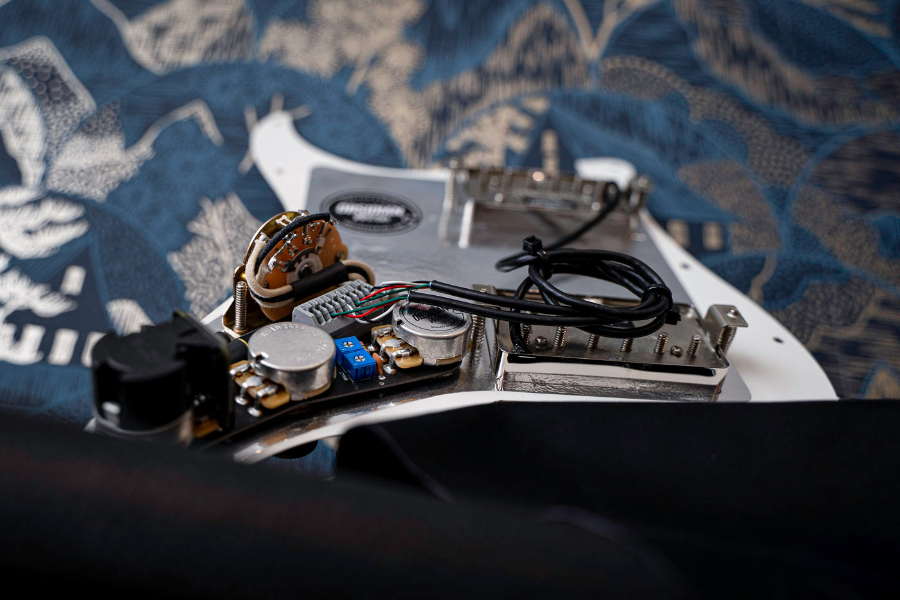
On an ObsidianWire harness, this wire should always go to the pickup's GROUND slot on the main solderless terminal.
This connection is part of the pickup's signal circuit and may be switched or manipulated by the harness during advanced pickup configurations.
Type 2 — Shield Ground
This wire grounds the pickup's metal components, such as a metal cover, baseplate or internal shielding. Its purpose is to prevent these components from acting as antennas and introducing unwanted electrical interference, hum or buzz into the guitar's signal.
Examples include:
- A separate ground wire on a Telecaster neck pickup (often green or yellow)
- The bare shield wire found on many humbuckers
- A dedicated cover or baseplate ground
On an ObsidianWire harness, these wires should always go to the screw-down GROUND connector.
Keeping the shield ground separate from the pickup's signal ground allows the harness to switch or manipulate the pickup signal without unintentionally switching its shielding or exposed metalwork.
The Multi-Use Ground
Many vintage-style pickups have a shared ground connection. This means the pickup coil ground and the ground for its metal parts are connected together internally and brought out through a single wire.
This is common with:
- Telecaster pickups
- Vintage-style humbuckers
- P-90s
- Some pickups with metal covers or baseplates
This is perfectly normal and works well with traditional guitar wiring. However, it can create problems when the pickup is used with an advanced wiring system that requires the coil ground and shield ground to remain electrically separate.
For example, a pickup with a shared ground may not be suitable for certain coil-splitting, phase, series/parallel or other switching configurations without modification.
How do I know which type of ground my pickup has?
The best approach is to identify each wire using the pickup manufacturer's wiring diagram.
If the manufacturer provides a separate wire for the pickup cover, baseplate or shielding, this is normally the Shield Ground.
If the pickup only has a single ground wire and the metalwork is internally connected to it, it is likely a Multi-Use Ground.
If you're unsure, check the manufacturer's wiring information or contact ObsidianWire with the pickup brand, model and wire colours before connecting the pickup to an advanced wiring harness.